The right temperature keeps food safe and stops a fridge from wasting power. Choose what you are checking and put in the thermometer reading to see whether it is right, too warm or too cold, with what to do next. The converter works between Celsius and Fahrenheit, and the tables below give the target temperatures and food storage times.
TL-07The right temperature for each
| What | Aim for | In °F | How to check |
|---|---|---|---|
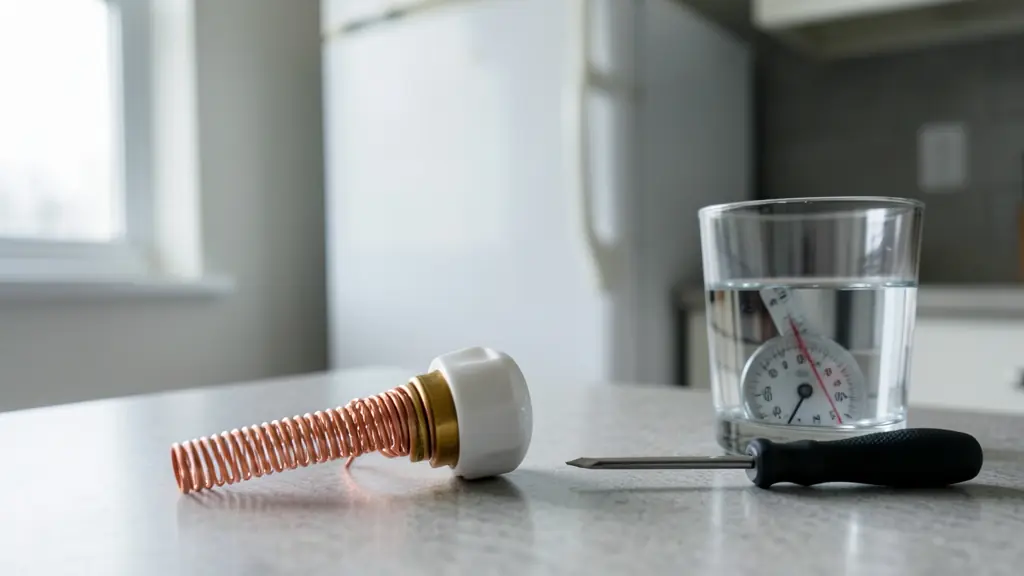
| Fridge (fresh food) | 3 to 5 °C | 37 to 41 °F | Measure with a thermometer in a glass of water on the middle shelf, after the door has been shut a few hours. |
| Freezer or chest freezer | -25 to -18 °C | -13 to 0 °F | Measure between frozen packs, not against the wall. Food at -18 °C or colder keeps safe indefinitely, though quality drops over time. |
| Bottle cooler or drinks fridge | 2 to 6 °C | 36 to 43 °F | Drinks fridges in shops are opened often: check them in the afternoon, when they are working hardest. |
| Deli or meat display chiller | 0 to 4 °C | 32 to 39 °F | Check with a probe thermometer in the product, not the air, and keep the night blind down after hours. |
| Cold room chiller | 0 to 4 °C | 32 to 39 °F | Meat and dairy are best at 0 to 2 °C; many fruits and vegetables prefer a little warmer. Log it twice a day. |
| Freezer room | -25 to -18 °C | -13 to 0 °F | Watch for frost on the evaporator and ice round the door: both raise the temperature and the running cost. |
| Vaccine or medicine fridge | 2 to 8 °C | 36 to 46 °F | Vaccines must stay between 2 and 8 °C and must never freeze. Record the minimum and maximum twice a day. |
Most fridge dials don't show degrees, and on many a higher number is colder. Set it in the middle, wait 24 hours and check with a thermometer.
How long food keeps
Safe storage times in a fridge at 4 °C or colder and a freezer at -18 °C, from the widely used cold food storage chart. Freezer times are for quality: food kept frozen at -18 °C stays safe, but dries out and loses flavour after these times.
| Food | Fridge | Freezer |
|---|---|---|
| Raw mince | 1 to 2 days | 3 to 4 months |
| Raw steaks, chops and roasts | 3 to 5 days | 4 to 12 months |
| Raw chicken, whole or pieces | 1 to 2 days | 9 to 12 months |
| Raw sausages and boerewors | 1 to 2 days | 1 to 2 months |
| Raw fish | 1 to 2 days | 2 to 8 months (oily fish the shorter time) |
| Bacon | 7 days | 1 month |
| Ham and cold meats, opened | 3 to 5 days | 1 to 2 months |
| Cooked leftovers, soups and stews | 3 to 4 days | 2 to 6 months |
| Milk | About 7 days | About 3 months |
| Yoghurt | 1 to 2 weeks | 1 to 2 months |
| Hard cheese, opened | 3 to 4 weeks | About 6 months |
| Eggs in their shells | 3 to 5 weeks | Don't freeze in the shell |
When the temperature won't come right
A fridge that stays warm with the dial turned colder, or a freezer that won't reach -18 °C, has a fault: dusty coils, a failed fan, a defrost problem, a thermostat or a gas leak. Try the fault finder, or see fridge not cooling and fridge thermostats. For shops and cold rooms, see commercial refrigeration.