A fridge runs 24 hours a day, 365 days a year, so a few rand a day adds up. This calculator turns the kWh figure on the energy label, or the wattage on the rating plate, into rand at your electricity price, allows for a hot kitchen or garage, and shows what a new appliance of the same size would use instead.
TL-01What fridges cost to run in South Africa
These are typical figures for new appliances at about R4.00 per kWh. The last column is a fridge of the same size about 15 years old, which typically uses around 1.5 times as much (a large UK field trial measured about 40% more for appliances over 11 years old): insulation, seals and compressors were less efficient, and they wear.
| Type | Label, a year | A month | A year | 15 years old, a year |
|---|---|---|---|---|
| Bar fridge (about 90 L) | 110 kWh | R37 | R440 | R660 |
| Fridge freezer (about 200 to 300 L) | 250 kWh | R83 | R1,000 | R1,500 |
| Large fridge freezer (about 300 to 450 L) | 300 kWh | R100 | R1,200 | R1,800 |
| Side by side or French door (500 L or more) | 450 kWh | R150 | R1,800 | R2,700 |
| Upright freezer (about 160 to 250 L) | 260 kWh | R87 | R1,040 | R1,560 |
| Chest freezer (about 200 L) | 230 kWh | R77 | R920 | R1,380 |
How to read the energy label
Every new fridge and freezer sold in South Africa carries an energy label with a class (A+++ to G on older labels, A to G on the newer ones) and a number in kWh per year. That number is what the appliance uses in a year in a standard test room, so it is the best figure to put in the calculator. The class tells you how efficient it is for its size, not what it costs: a big A class fridge can still use more than a small C class one.
No label? Look on the rating plate inside the fridge or on the back. It gives the rated power in watts and often the energy use per 24 hours. The rated watts is the compressor running; a fridge only draws it while the compressor runs, usually a third to half of the time.
Five ways to cut what your fridge costs
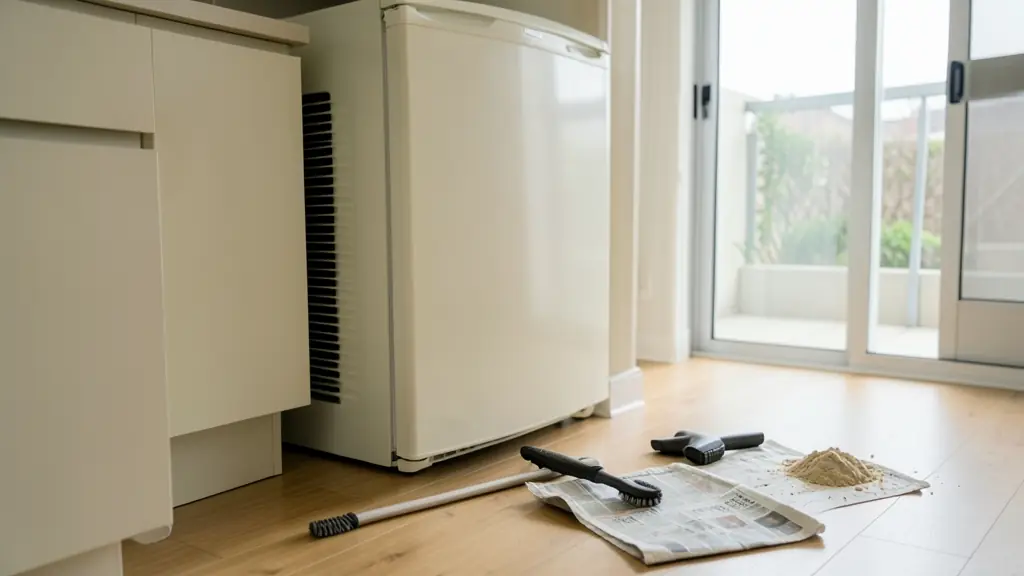
- Clean the condenser coils at the back or underneath once or twice a year. Dust makes the compressor run longer and hotter.
- Leave a gap. About 10 cm at the back and a few cm at the sides lets the heat out. Don't box a fridge into a tight cupboard.
- Check the door seal by closing the door on a sheet of paper: if it slides out easily, cold air is leaking. See fridge door seals.
- Set it right: about 3 to 5 °C in the fridge and -18 °C in the freezer. Every degree colder costs more. See the temperature guide.
- Keep it away from heat: the stove, a sunny window or a hot garage roof all make it work harder.